


Squamous Cell Carcinoma (SCC)
After basal cell carcinoma, squamous cell carcinoma is the second most common type of skin cancer. Also unlike BCC, which forms over months or even years, SCC can grow quickly and spread through the body. SCCs usually appear as pink scaly lumps on the back of hands, arms, legs, scalp, face, ears and lips.
It's important to check your skin regularly for any strange growths or changes. Finding squamous cell carcinoma early can improve treatment success rates. If you see any strange lumps or sores that won't heal, visit a Skin Cancer Specialist for an evaluation.
Always protect your skin from UV rays with sunscreen and protective clothing to prevent skin cancer.
Squamous Cell Carcinoma Pictures

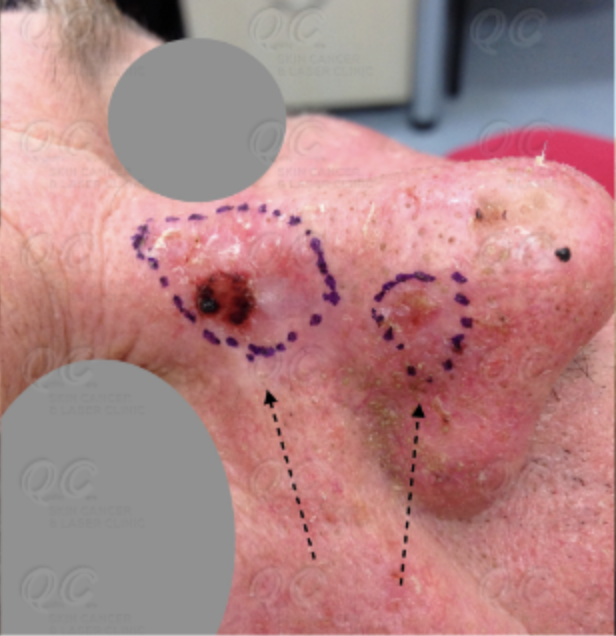

Squamous Cell Carcinoma Treatment In Melbourne
How is squamous cell carcinoma, a Non-melanoma skin cancer, treated?
SCC treatment usually includes surgery to remove the cancer. Doctors may use other options like laser treatment, radiation, or topical medications based on the severity of the cancer.
Surgery
Surgical excision is the primary treatment in the management of Squamous Cell Carcinomas (SCC). The surgeon removes the cancerous growth and a surrounding margin of healthy tissue (usually 4-5mm). The extent of surgery depends on the size, location, and depth of the tumour.

Skin Cancer Laser Treatment
In this process, a fractional laser treats the area first. Then, a light-sensitive compound is put on the skin and exposed to a specific light wavelength. This light activates the compound, which helps destroy the cancerous cells.
This therapy is highly successful in managing superficial forms of squamous cell carcinoma e.g. Bowen's disease. However, it is not suitable for the treatment of other types of SCCs.


